
Here in Valencia, by your second year of living in the city, you naturally accept the fact that on Sundays the air is filled with the pleasant aroma of saffron and wood smoke. For the locals, paella is not just a delicious lunch; it is the best excuse for family, friends, and loved ones to gather together. Let's go a little further this time and see where the history of this dish began, how the seafood version emerged, and where we can taste it exactly as they made it a century ago.
Where the First Paella Was Made and Its Secret
The story begins near Valencia, in the villages surrounding the Albufera lake, specifically in El Palmar. It was here that peasants working in the vast rice fields came up with the idea of cooking a hearty lunch in a large, flat pan. The list of ingredients was naturally determined by what the local land offered, and today the composition of an authentic Valencian paella is based on one specific standard. To prepare it, you absolutely need short-grain rice, preferably Bomba or Albufera, to which you add chicken and rabbit meat, two types of local beans—flat green and large white—quality olive oil, fresh tomatoes, sweet paprika, and, of course, natural saffron, which gives the dish its famous golden color and unique aroma.
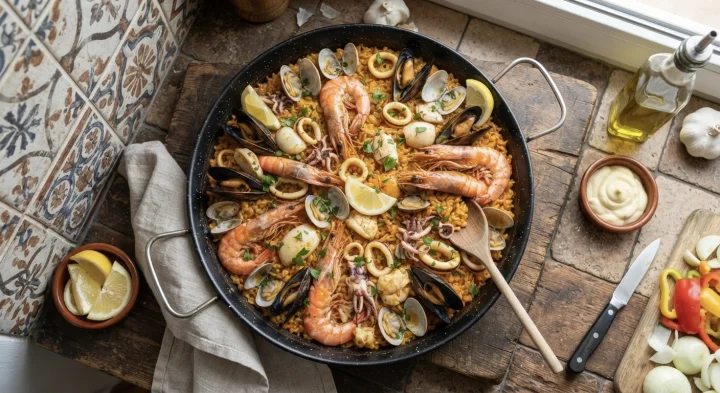
The Scent of the Mediterranean or Seafood Paella
While the original recipe is based on meat, the fishermen living on the Mediterranean coast soon created their own version. Seafood paella (Paella de Marisco) is just as popular and beloved in Valencia. In this case, the meat is entirely replaced by freshly caught squid, shrimp, mussels, and small crabs. There is an even more comfortable version called "Senyoret" (Arroz del Senyoret), where all the seafood is already peeled and prepared so you don't get your hands dirty while eating. The main secret of a seafood paella lies in the very strong and aromatic fish broth in which the rice is cooked.

Century-Old Restaurants and Live Fire
When making an authentic paella, the fire is critically important. It is traditionally lit with orange tree branches, which gives the rice a slightly smoky flavor. The main charm of the dish is the socarrat—a thin, crispy, caramelized layer of rice stuck to the bottom of the pan. Today, there are still a few historical places in Valencia where these rules have been strictly followed for over 100 years. For example, the legendary beachfront restaurant "La Pepica," which opened in 1898 and was once a favorite spot of Ernest Hemingway. There is also "Casa Carmela," which has been preparing paella exclusively over an open wood fire since 1922. Visiting such places feels like traveling through time.
Paella in Other Regions of Spain
As for other parts of Spain, you will find paella practically everywhere, though Valencians often jokingly call them "Arroz con cosas" (rice with things). In Andalusia or Catalonia, they frequently make the so-called mixed paella (Paella Mixta), where meat and seafood are combined. In tourist areas, they even add chorizo sausage to the rice, which is completely unacceptable to the locals. However, gastronomy is a living organism, and every region has adapted the dish to its own tastes and available products. Nevertheless, if you want to experience the authentic, historical aroma exactly as it was born by the Albufera lake, you must definitely try it in Valencia.
— Discover your Spain

