
What is the Difference Between NIE and TIE?
Starting a life in Spain is an amazing adventure, though navigating its bureaucratic labyrinths can sometimes turn into a real headache. One of the most common misunderstandings revolves around two acronyms: NIE and TIE. Many people think they are the same thing, but legally, there is a massive difference between them.
NIE (Número de Identidad de Extranjero)
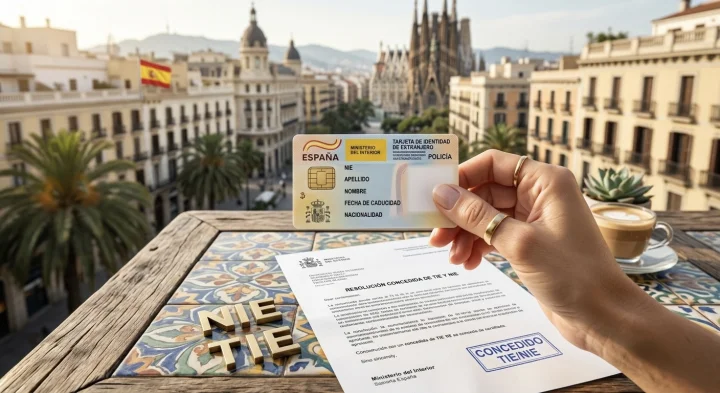
This is the Foreigner Identity Number. Think of it as your personal identification number in Spain, assigned to any foreigner who has an economic, professional, or social connection to the country. The NIE is typically issued on a standard, white A4 sheet of paper (or a green one for EU citizens) and does not prove your legal status. With this number, you can open a bank account, buy a car, or pay taxes, but it does not grant you the right to work or reside in Spain. This number stays with you for life.
TIE (Tarjeta de Identidad de Extranjero)
This is the Foreigner Identity Card—that highly sought-after physical plastic document that proves your legal status (residency) in Spain. The TIE displays your photo, fingerprint, address, the type of your residency (student, Arraigo, work, etc.), validity dates, and, of course, your NIE number itself. Consequently, your main goal as an expat is to obtain this physical card.
The Path to the Physical Card
Once you receive a positive response, or "Resolución favorable," from the immigration office (Extranjería), the process of issuing your TIE card begins. This procedure takes place at the National Police station (Comisaría de Policía) and involves several logical steps:
Booking an Appointment (Cita Previa)
The first and often the most challenging step is booking an appointment at the National Police station. On the Spanish government portal, you need to select the option "Policía - Toma de huellas (Expedición de tarjeta)". On the day of your appointment at the police
Official Form and State Fee
Before going to the police, you will need to fill out a special application, Form EX-17, and print it in duplicate. Along with this, you must pay the state fee in advance, known as Tasa 790 código 012. The cost of the tasa depends on your residency type. For example, getting an initial card costs around €16, while for long-term residency (Larga duración), the amount is closer to €21. You can pay this fee at any Spanish bank or via an ATM, after which you will need to keep the stamped receipt as proof of payment.
3. The Complete Document Package To submit your fingerprints, you must prepare the following:
A valid passport and a copy of its main page.
A copy of the positive decision (Resolución) from the immigration office.
A recent certificate of address registration (Empadronamiento), issued no more than 3 months ago.
One color photograph with a white background meeting Spanish standards (Carnet size).
Card Production and Issuance
After your visit to the police and successfully submitting your fingerprints, the officer will hand you a temporary document (Resguardo), which will display a so-called lot number (Lote). This very document proves that your physical card is in the process of being manufactured.
Generally, producing a TIE card takes between 30 and 45 days. You can track the progress of the lots through unofficial information channels of your province's police, or simply book a new appointment (Cita previa) after 40 days using the system option "Policía - Recogida de Tarjeta de Identidad de Extranjero". To pick up your card, you will only need your valid passport and the temporary paper document given to you by the police.
By following these simple but important rules, your bureaucratic journey will end successfully, and you will be able to start your new Spanish life with a fully-fledged document.
This article was prepared based on the official legislative sources of the Kingdom of Spain and verified data from the Official State Gazette (BOE).
— Discover Your Spain.


